Wednesday, December 7, 2011

Sewing Craft Project

Sewing For Young Children

By: Jannine Swersky

Materials

1. Stringing shapes/noodles on pipe cleaners/small beads on pipe cleaners

2. Needle point canvas

3. Lacing Cards

4. Sewing Project – Challah Bags

For younger children

1. Give children pipe cleaners and have children put noodles and small beads on them

2. Teach children the motion of going in and out of the canvases (For three and four year olds, I would use a small square/rectangular canvas)

3. Allow children to explore the feeling of sewing the canvas

4. Show children how to sew on fabric

5. Allow children to choose fabric markers to decorate their bag

6. When ready, give children two fabric pieces with dots on where they should sew

Benefits of Sewing

· Fine motor skills

· Hand-eye coordination

· Following Patterns

· Concentration

Resources

§ http://www.activityvillage.co.uk/lacing_cards.htm

§ The Winky Cherry System Of Teaching Young Children to Sew. Winky Cherry (1993)

http://www.helium.com/items/353777-how-to-teach-sewing-to-kids


Monday, December 5, 2011

Cornstarch Clay Craft Project

Cornstarch Clay!

Recipe

-2/3 cup of salt

-1/3 cup of baking soda

-1/2 cup of cornstarch

-1/2 cup of water

-1 note to your roommates warning them that this is not mashed potatoes!

Combine all ingredients (except the note to your roommates!) in a small saucepan. Heat over medium heat and stir as the mixture begins to bubble. Continue stirring until you feel the mixture solidifying (the jump will be sudden!). Remove from the heat, place your dough in a container/bowl to cool. It’s time to play!

Note: You may choose to add food coloring to give color to your dough. Kids can also draw on the dough with markers to give it color while they play!

Now I cooked it…what do I do with my students!?!?!

In room 601B we….

-Set it up as a center for our Kindergarteners

-Encouraged them to explore the clay in multiple ways

-Just play with it, how is it different from other dough’s and clay’s we have explored? How is it the same? This can help support descriptive vocabulary and provide a sensory experience to young learners.

-Can we make the letters with our dough? This has supported our literacy program as children get to “feel” the letters they are learning. The dough dries over night giving us “Letter Statues”.

-Have children explore the shapes that build a person! In studying “the self” in 601B we “built” family portraits to share with each other.

Paper Making Craft Project


Paper making

Materials

1. Torn Scrap Paper and/or Newspaper

2. Water

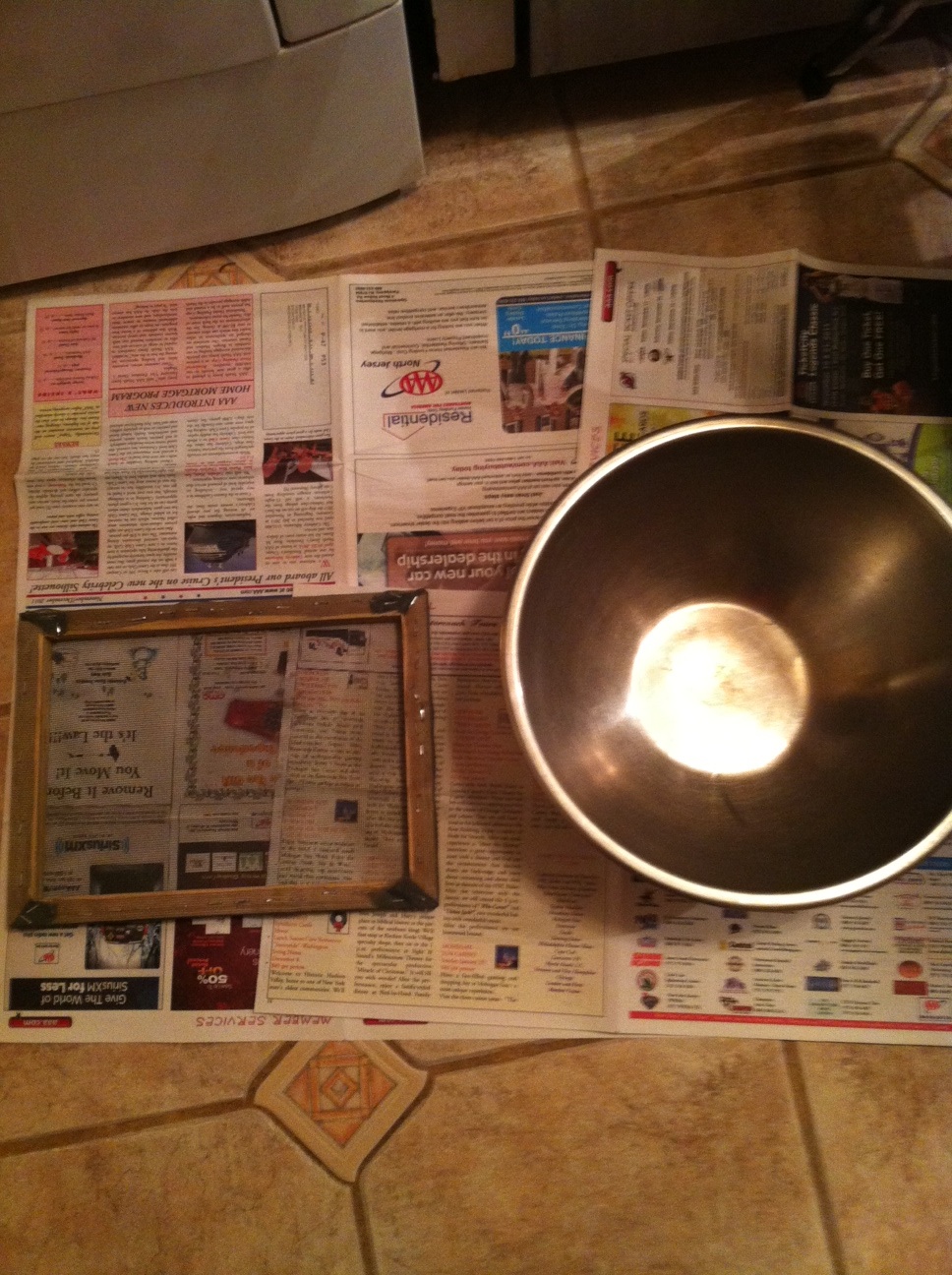
3. Wooden frame with a fitted screen

4. Large bowl or bucket

5. Oven (Optional)

6. Blender

Paper Making Instructions

Tear up the scrap paper into small pieces. If your students are able to, have them help you. Sometimes being destructive can be fun! Fill the blender up with the paper and cover the paper with water. Warn the children that the blender is very loud, have them stand back, and blend the mixture until it’s a mushy oatmeal consistency. Hold the wooden frame screen over the bowl or bucket and pour the mixture on top of the screen. Have your students take turns flattening the mixture down with their hands and/or a sponge. The goal of the pressing is to get as much water out as possible. If it’s a hot and sunny day, you can leave the screen out in a safe place and wait for it to dry. If it is cold outside, it might be best to dry it with a hairdryer, or let it sit in an oven at about 150 degrees for 3-4 hours, depending on how thick you choose to make the paper.

Introducing the art of paper making to students

Papermaking is an excellent opportunity to present the idea of recycling to your students. Ask if any of them know what recycling is and if they practice it in their homes. I told my three year old (who I did this project with) that recycling was taking something old and reusing it and making it into something new. If you use different kinds of scrap paper it might be interesting to ask your students what makes the paper different. How do they feel different? How do they look different? Words including soft, rough, smooth, shiny, dark and light could be introduced, depending on the variety of paper you provide.

When pressing the paper mixture down into the screen, it’s important to encourage your students to be gentle. You don’t want them to break the screen or un-flatten the mixture. You can also have them guess what color the mixture will turn out to be if you’re mixed multicolored paper.

Resources

How to Make Paper- An Illustrated Step-by-Step Guide 96 by Stacie Naczeinik

Solidwastedistrict.com

My Prints


My prints were made using temper paint, colored paper, lego pieces, forks, bottle tops, and two prints I carved out of rubber erasers.

12.01.11 Printmaking!


Response to Eisner, Dissanayake, and Shirrmacher Article

Children’s Play and Learning – Perspectives and Policy Implications

The Role of Art and Play in Children’s Cognitive Development

“Brains are biologically given, minds are culturally acquired” (Cole, 1985)

When I think of childhood, my mind automatically think of running free with few life responsibilities, various kinds of play opportunities, casual and sometimes fleeting friendships, and eventually a school schedule that becomes more time consuming and serious with each year. This, of course, is my perspective as an adult with a young child, and is probably slightly idolized and envious due to the wide array of current responsibilities on my plate. This idolized glance back of play and art in the lives of children can, at first, not seem to be highly purposeful and only prevalent due to the limited responsibilities of childhood. However, retrospectively, and with the educational studies I have experienced, there is so much evidence that proves play and art have an intracle role in development.

“Both art and play, like imagination and fantasy, are not regarded as a part of the serious business of schooling. To be serious requires clear goals, a well thought out plan for achieving them and, perhaps, most of all, hard work.” (Eisner. 1990) Our current American society does not regard play and art as work possibilities. Generally they are kept very separate and with the current educational system, art and playtime are having less of a presence, while other academics and activities take precedence. There are many different types of play that develop different types of skills and a variety of art forms as well. It isn’t all free and without purpose, as some might think.

In regards to play, there is explorative play, games with rules, parallel playing, and performance. These different kinds or play can help children develop interpersonal skills, listening skills, public speaking skills, improvisation skills, and most importantly allow them to “determine the possibilities of objects, events, qualities, and ideas.” (Eisner. 1990) Exploring the imagination can later lead to interesting story writing, play writing, scientific hypothesis, to name a few. Music can help with math, dance can help children stay fit and learn about their anatomy and physical limits and possibilities of their body.

In regards to art, there is physical art (painting, drawing, collage, puppetry, clay, etc), music, and dance. These different art forms can help children make sense of their world using their senses. The more a child is exposed to, the more opportunities they have for advancement. The more you read o a child, the larger their vocabulary, the wider variety of food you given them, the more advanced their palate, etc. Allowing children to get messy, play, and experience the world around them by touching, observing, and testing things out, can only lead to a greater understanding. Art can additionally be an excellent way for children to express themselves, help them to figure out their own personal voice.

By a very young age, children spend majority of their time in school. Due to the amount to time spent there, it can become one of their strongest influences. Their development, cognitive and physical, is also affected by the home and/or day care experiences they had prior to having a regular school schedule. The nature of the family, the amount they were read to, time spent in nature, food they ate, all play a role. After a child’s school schedule picks up, those “home” components still play an important role in the development of children. Providing artistic experiences in the school setting for children can open their eyes of perception. Encouraging children to observe different kinds of art forms and experience them themselves can lend a hand in various academic subjects. Science, for example, uses a very similar process to that of the artistic experience. Art and play: “Both engage imagination, both require reflection, both profit from skill, both seek to generate new forms of experience, both lead to invention, and both are marginalized in the priorities of American education.” (Eisner. 1990)

Puppet Making Journal


Since I had missed the previous session where my classmates began their puppet making/paper mache experience, I just had to jump right into it. At first, it was a little intimidating because it seemed as though everyone knew what they were doing, and I saw a variety of different styles and creative choices. Luckily I was able to join a group that had already been established and Ms. Gwathmey provided a book and some helpful instruction about making a hand puppet.

I noticed that there were many different art techniques that went into the puppet making. There was a design component, paper mache, sewing, and painting. The paper mache and design were relatively easy for me to pick up, but the sewing was a little more difficult. I come from a family of talented seamstresses. My great grandfather was a successful tailor. He taught my grandmother how to sew, my father is an excellent surgeon, and my older sister also picked up on the skill. When we were little, and used to play with dolls, I would come up with extensive imaginary games, while my sister would sew them detailed ensembles. A few people over the years attempted to teach me how to sew, but I never really picked up the skill. Looking back now, I think I was jealous and intimidated by the advanced abilities of my family members and I let that inhibit me from learning the skill they excelled in because I feared that I wouldn’t be as good at it.

One of my group members was very encouraging and walked me through some of the sewing questions I had. In a classroom, students will have various skills and be naturally talented in certain capacities while they may struggle in others. As teachers, we won’t necessarily be able to know all of the stories as to why they excel or struggle, but it’s our role to be aware and allow them to shine and encourage them when necessary.